

Getting to K’gari
There are several ways to get to K’gari, depending on your starting point, budget, and sense of adventure.
| Method | How It Works | Pros | Cons / Notes |
|---|
| Self-drive 4WD | Drive your 4WD via Inskip Point, River Heads, or Hervey Bay | Freedom to explore at your own pace; access to remote spots | 4WD required; need QPWS vehicle permit; sand driving skills needed |
| Guided 4WD Tours | Join a 1–3 day tour from Hervey Bay, Rainbow Beach, or Noosa | No driving worries; guides show best spots; often includes meals & accommodation | Less flexibility; cost can be higher than self-drive |
| Ferry / Boat | Drive-on or passenger ferries from River Heads or Inskip Point | Access for non-4WD vehicles; scenic approach | Need to book in advance; mobility limited if not bringing a vehicle |
| Air / Scenic Flight | Small plane or helicopter from Hervey Bay, Rainbow Beach, or Noosa | Incredible aerial views; fast | Expensive; doesn’t allow island exploration on the ground |
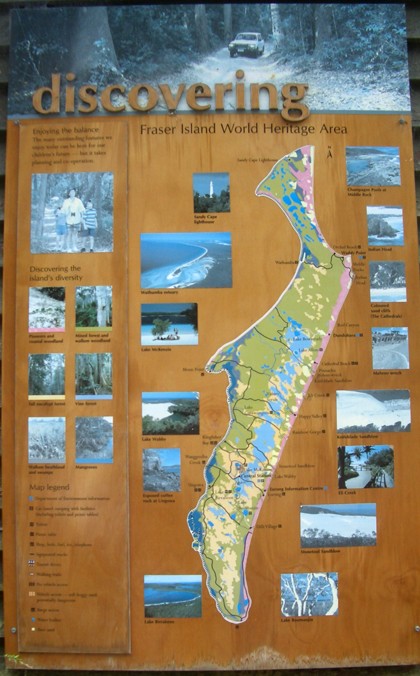
Must See on K’gari
- Drive Along 75 Mile Beach
- Cruise the island’s famous “sand highway” — a 4WD-only route running the length of the eastern coast. You’ll pass shipwrecks, cliffs, and wide open beach views. Watch tides and aircraft landings!
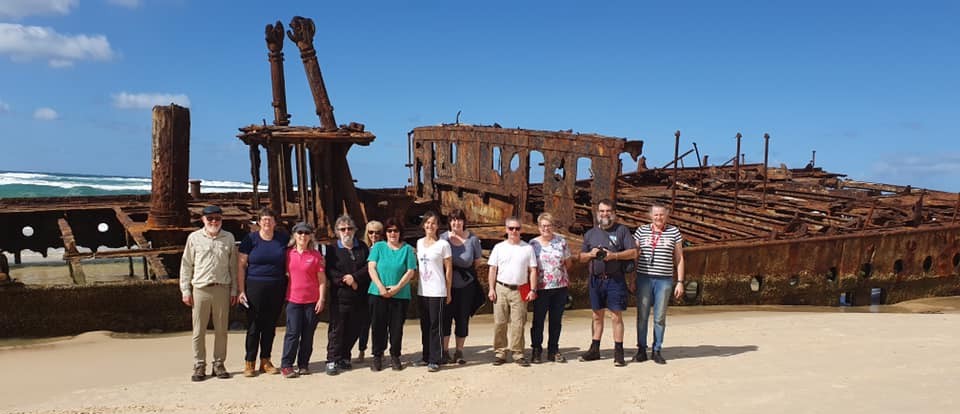
- Maheno Shipwreck
- Explore the rusting remains of the SS Maheno, washed ashore in 1935. A must-see historic landmark and one of K’gari’s most photographed spots.
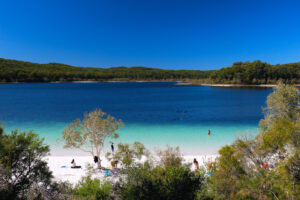
- Lake McKenzie (Boorangoora)
- Swim in crystal-clear, turquoise water surrounded by pure white silica sand — an idyllic freshwater lake perfect for relaxing or picnicking.
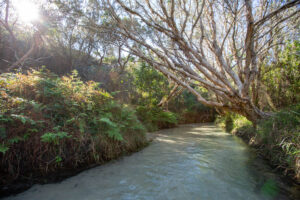
- Eli Creek
- Float down this freshwater stream or stroll the boardwalk. It’s one of the island’s most popular picnic and swimming areas.
- Central Station & Pile Valley Rainforest
- Walk among towering satinay and kauri pines in a rare rainforest growing on sand. Learn about the island’s ecology and timber-cutting history.
- The Pinnacles Coloured Sands
- See over 70 shades of red, orange, and yellow sands forming dramatic cliffs along the beach — best viewed in early morning or late afternoon light.
- Indian Head Lookout
- Climb this rocky headland for panoramic coastal views and a chance to spot whales, dolphins, rays, and sharks.
- Lake Wabby & Hammerstone Sandblow
- Walk across vast shifting dunes to reach Lake Wabby, the island’s deepest perched lake, set against emerald green water and golden sand.
- Champagne Pools
- Natural rock pools where waves crash over volcanic rocks, creating bubbling, frothy water that looks just like sparkling champagne — a stunning and safe spot for a refreshing saltwater swim.
- Sandy Cape Lighthouse,
- Built in 1870, stands at the northern tip and offers spectacular coastal views — a historic landmark reached by 4WD through remote dunes and pristine beaches.
- Central Station
- Once a busy forestry camp and is now a peaceful rainforest hub on Fraser Island, where visitors can explore lush boardwalks, crystal-clear creeks, and towering satinay and kauri pines.
- You may even spot a snake on the boardwalk if you are lucky enough.
- Once a busy forestry camp and is now a peaceful rainforest hub on Fraser Island, where visitors can explore lush boardwalks, crystal-clear creeks, and towering satinay and kauri pines.
- Wanggoolba Creek
- Crystal-clear, slow-flowing stream winding through lush rainforest near Central Station, famous for its pure sand bed and tranquil, mirror-like waters.
- Pile Valley Rainforest
- Serene pocket of lush greenery, where towering satinay and brush box trees rise from the sandy soil, showcasing one of the world’s few rainforests growing entirely on sand.
- Ngkala Rocks
- Striking coastal rock formations on Fraser Island’s eastern shore, known for their rugged beauty, scenic ocean views, and popular fishing and photography spots.
- Lake Birrabeen
- Peaceful, tea-coloured perched lake, surrounded by tall eucalypts and sandy beaches, perfect for a quiet swim or relaxing picnic.
- Lake Allom
- Serene, tea-coloured perched lake, nestled within dense forest and offering calm waters ideal for canoeing, wildlife spotting, and tranquil walks along its sandy shores.
- Poyungan Rocks
- Dramatic coastal granite formations, offering rugged scenery, panoramic ocean views, and excellent opportunities for photography and sightseeing.
- Woralie Creek
- Picturesque freshwater stream on the western coast, where clear waters flow across the sand into Hervey Bay — a peaceful spot for swimming, picnicking, and photography.
- Kingfisher Bay
- On the western coast, featuring a scenic jetty, calm swimming beaches, and the award-winning Kingfisher Bay Resort surrounded by natural bushland.
- Dilli Village
- Relaxed coastal campground and education centre on the southern end, offering basic facilities and easy access to beaches, freshwater lakes, and 4WD tracks.
- Valley of the Giants
- Remote and scenic area on the western side, known for its towering ancient satinay and tallowwood trees, offering an unforgettable drive and glimpse into the island’s lush rainforest interior.
- Satinay trees, scientifically known as Syncarpia hillii are large trees native to K’gari and the Coolooa area. They are also called Fraser Island turpentine. These trees are known for their impressive size, reaching heights of up to 50 meters, with some individuals being over 1,000 years old.
- Remote and scenic area on the western side, known for its towering ancient satinay and tallowwood trees, offering an unforgettable drive and glimpse into the island’s lush rainforest interior.
- Pile Valley
- Beautiful rainforest area, where towering satinay and brush box trees grow straight from the sand, creating a cool, shaded retreat perfect for walking and nature photography.
- White Lake
- Shallow, seasonal freshwater lake known for its brilliant white sandy base and clear water, creating a peaceful and picturesque spot for a short visit or quiet reflection.
- Eurong
- Central hub on the eastern beach, offering accommodation, camping, and supplies, and serving as a convenient base for exploring nearby attractions.
- Lake Birrabeen
- Stunning perched lake with clear, calm freshwater and pure white silica sand, offering a peaceful alternative to the busier Lake McKenzie.
- Lake Benaroon
- Quiet, tea-stained perched lake surrounded by tall eucalypts and ideal for a peaceful swim or picnic in a more secluded setting.
- Lake Garawongera
- Tranquil, tea-coloured perched lake fringed by paperbark and eucalypt forest, offering calm waters and a serene spot for swimming and birdwatching.
Dingoes on K’gari
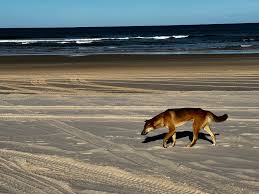
Dingoes on K’gari are one of the island’s most famous — and misunderstood — residents. They are among the purest dingo populations in Australia, protected by law and considered an important part of the island’s natural heritage. While they are beautiful, intelligent wild animals, they can also be dangerous if people don’t follow safety rules.
Dingoes on K’gari are wild, not domesticated — they are not pets, even if they seem curious or friendly.
Dingo Safety — How to Stay Safe
Because dingoes are wild predators, they can behave unpredictably, especially around food or when they feel threatened. To stay safe:
- Never feed dingoes.
- Feeding them — intentionally or accidentally — teaches them to associate humans with food. This leads to aggressive behaviour, as dingoes may approach or harass people expecting food.
- Once dingoes associate humans with food, they can become aggressive if food isn’t given. This has led to attacks on visitors, including serious incidents.
- Secure all food and rubbish.
- Use dingo-proof storage and dispose of waste properly. Even small scraps attract them.
- Keep your distance.
- Stay at least 20–50 metres away from dingoes. Do not approach them for photos or try to interact.
- Never run from a dingo.
- Running can trigger their hunting instincts. If one approaches, stand tall, stay calm, back away slowly, and keep eye contact.
- Supervise children closely.
- Children are more vulnerable — always keep them within arm’s reach, especially at campgrounds and beaches.
- Camp in fenced or designated dingo-safe areas.
- These areas are equipped with fencing to reduce encounters.
- Never go to the toilet at night alone.
- Dingoes are more active after dark, and park rangers advise us that they are less likely to approach groups of people. Always take someone with you if you need to leave your campsite at night, carry a torch, and stay alert to your surroundings.
Books
- Fraser Island (K’gari)” Queensland Australia photography and text by Peter Meyer.
- Fraser Island Australia photography and text by Peter Meyer.
- K’gari (Fraser Island) and the Brisbane Islands by Hemma.
- Explore Fraser Island : explore 50 unique locations by David and Julie Hinchliffe.
- Maheno : Commemorative Booklet text by Russell Postie.
Useful Links
- K’gari, Great Sandy National Park: https://parks.qld.gov.au/parks/kgari-fraser/about
- K’gari-Fraser Island: https://www.visitfrasercoast.com/kgari-fraser-island/
- K’gari: https://whc.unesco.org/en/list/630/
- K’gari (formerly Fraser Island): https://www.queensland.com/au/en/places-to-see/destinations/fraser-coast/kgari
- About Fraser Island: https://fido.org.au/about-fraser-island/
- Fraser Island travel guide: How to visit K’gari + top things to do: https://aglobewelltravelled.com/2025/10/10/fraser-island-travel-guide/
- Things to do on K’gari (Fraser Island): https://www.kingfisherbay.com/things-to-do/
- A first-timer’s guide to visiting Australia’s Fraser Island: https://www.lonelyplanet.com/articles/guide-to-visiting-australias-fraser-island
- Why Is K’gari (Fraser Island) So Special?: https://fraser-tours.com/article/why-is-fraser-island-so-special?srsltid=AfmBOoofuueg2rf7qoMTYlGvefQNM-RCY8PYwEw-9_0Ekv33RfL2yu22
- K’gari (Fraser Island): https://www.fraserisland.net/
- The Formation of K’gari: https://www.fraserisland.net/fraser-island-formation
- The Ancient Forests of Satinay and Brush Box Trees on Fraser Island: https://fraserislandtoursaustralia.com.au/blog/the-ancient-forests-of-satinay-and-brush-box-trees-on-fraser-island/
- How To Navigate Ngkala Rocks: https://mr4x4.com.au/how-to-navigate-ngkala-rocks/
- World Heritage Places – K’gari: https://www.dcceew.gov.au/parks-heritage/heritage/places/world/kgari-fraser-island
- Attractions Fraser Island (K’gari): https://orchidblue.com.au/attractions/
- Getting Here: https://www.fraserislandbeachhouses.com.au/kgari-driving.html
- Driving on sand: https://parks.qld.gov.au/before-you-visit/visit-with-care/four-wheel-drive-with-care/driving-on-sand
- Driving on Fraser Island: https://fraser-tours.com/article/driving-on-fraser-island?srsltid=AfmBOorj3rlWRcC-sv-5d1ovJ4OIsdGtgYoFqjyZ44XPusVCSVAG1B-F
- Top Tips for 4×4 Driving on Fraser Island/Sand: https://www.dropbearadventures.com.au/top-tips-for-4×4-driving-on-fraser-island-sand/
- The ultimate K’gari accommodation guide: https://www.queensland.com/au/en/plan-your-holiday/accommodation/best-kgari-accommodation?
- Camping in K’gari: https://parks.qld.gov.au/parks/kgari-fraser/camping
- Accommodation: https://www.fraserisland.net/fraser-island-accommodation