

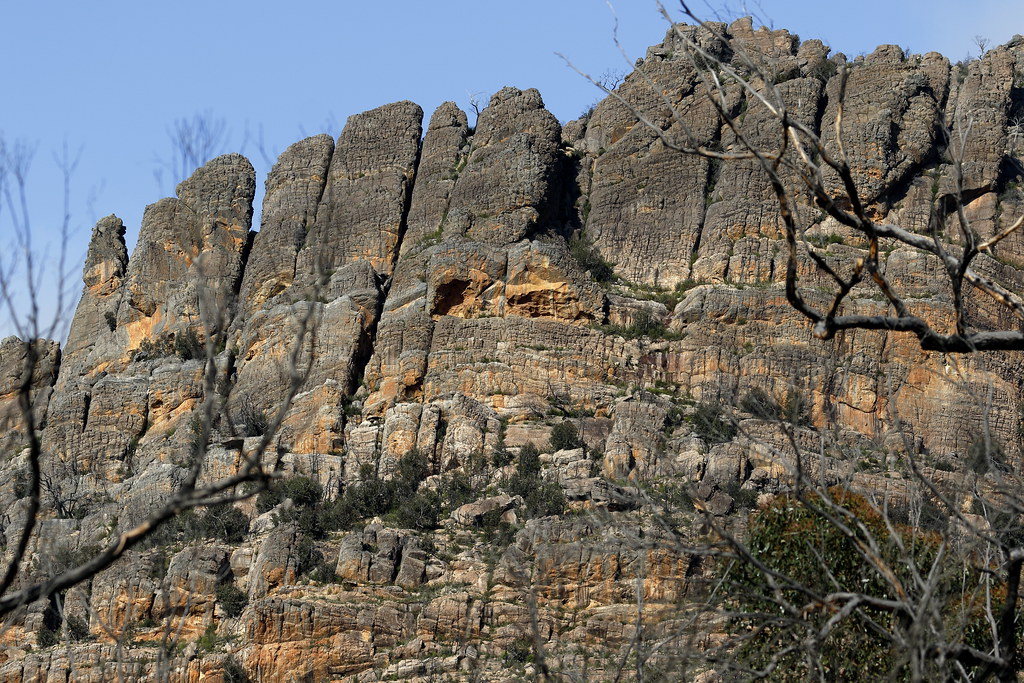
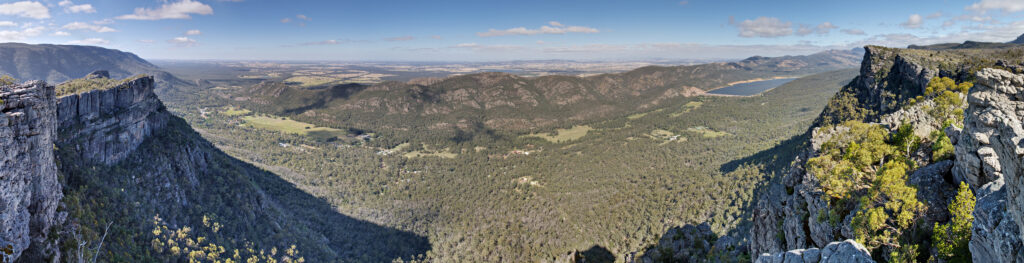
The Grampians National Park (Gariwerd) in western Victoria is a spectacular mountain range known for its dramatic sandstone peaks, cascading waterfalls, and rich Aboriginal heritage. The park offers outstanding opportunities for bushwalking, rock climbing, and wildlife spotting. The region is also home to ancient rock art sites created by the Jardwadjali and Djab Wurrung peoples, offering a deep cultural connection to the landscape. With its mix of rugged scenery, wildflowers, and panoramic views, the Grampians is one of Victoria’s premier nature and adventure destinations.
The Grampians (Gariwerd) mountain ranges were formed over millions of years through a combination of ancient geological processes, including sedimentation, uplift, and erosion. Around 400 million years ago, during the Devonian period, layers of sandstone and mudstone were deposited in a vast inland sea. Over time, these sediments were compacted into solid rock. Later, tectonic movements caused the Earth’s crust to fold and tilt, pushing the sandstone layers upward to form the steep ridges and dramatic escarpments that define the Grampians today.
Wind, rain, and rivers then slowly eroded and shaped these formations into the rugged peaks, valleys, and gorges seen today. The result is a stunning landscape of jagged ranges, sheer cliffs, and sheltered valleys, home to diverse plants, animals, and ancient Aboriginal rock art. The Grampians stand as a striking reminder of the immense geological forces that have shaped Australia’s landscape over hundreds of millions of years.
Brambuk – The National Park and Cultural Centre
Located in Halls Gap it is the official visitor and cultural centre for the Grampians (Gariwerd) National Park. It serves as both a gateway for visitors and a place of deep Aboriginal cultural significance, representing the traditions and stories of the Jardwadjali and Djab Wurrung peoples, the Traditional Owners of the land. The centre’s striking architecture, inspired by the outstretched wings of a cockatoo — a totemic bird in local culture — reflects its connection to nature and Country. Inside, visitors can explore interactive exhibits, Aboriginal art displays, and storytelling areas that share the rich heritage, Dreaming stories, and ongoing cultural practices of Gariwerd. Brambuk also provides detailed information about walking trails, park conditions, and conservation efforts, making it the perfect starting point for anyone wanting to understand both the natural beauty and cultural depth of the Grampians region.
Top Walks in the Grampians National Park
- The Pinnacle Walk (Starting from Halls Gap or Sundial Carpark)
- Distance: 4.2–9.6 km return (depending on the route)
- Time: 1.5–4 hours
- The most iconic walk in the Grampians, leading to a spectacular lookout over Halls Gap and the surrounding ranges.
- Choose the easier Sundial Carpark route or the more challenging Wonderland Loop via the Grand Canyon.
- The Balconies (formerly the Jaws of Death) (Reed Lookout Carpark, Victoria Valley Road)
- Distance: 2 km return
- Time: 30–45 minutes
- An easy, short walk through open forest to a famous rock ledge overlooking the Victoria Valley — one of the most photographed spots in the park.
- MacKenzie Falls Walk (MacKenzie Falls Carpark, near Wartook)
- Distance: 2 km return (to the base), 1.9 km return (to the lookout)
- Time: 1–2 hours
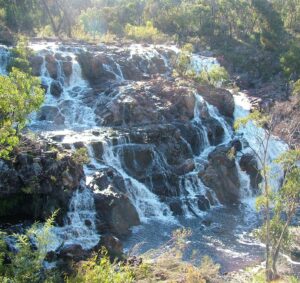
- A steep but rewarding walk down to the base of MacKenzie Falls, one of Victoria’s largest and most powerful waterfalls.
- Alternatively, take the gentler track to the lookout for a top-down view.
- Boroka Lookout (Near Halls Gap)
- Distance: 300 m return (easy)
- Time: 10 minutes
- A quick, accessible walk to a stunning panoramic viewpoint over Halls Gap, Lake Bellfield, and the eastern plains — perfect for sunrise or sunset.
- Mount William Summit Walk (Duwul) (Mount William Carpark, southern Grampians)
- Distance: 3.6 km return
- Time: 1.5–2 hours
- A steady uphill climb to the highest peak in the Grampians (1,167 m).
- Offers sweeping views across the entire range and beyond on clear days.
- Venus Baths Loop (From Halls Gap town centre)
- Distance: 2.3 km return
- Time: 45 minutes
- An easy family-friendly walk to a series of rock pools and smooth water holes along Stony Creek — great for relaxing and paddling in warmer months.
- Grand Canyon and Silent Street (part of Wonderland Loop) (Halls Gap / Wonderland Carpark)
- Distance: 5.5 km circuit (to the Pinnacle and back)
- Time: 2–3 hours
- A dramatic walk through narrow gorges, towering cliffs, and cool fern gullies, showcasing the park’s unique rock formations.
- Grampians Peaks Trail (Runs 160 km from Mount Zero to Dunkeld)
- Distance: Up to 13 days (or shorter sections)
- A world-class long-distance trail traversing the entire length of the Grampians.
- Walkers can tackle short sections such as Halls Gap to Mount Rosea or Dunkeld to Mount Abrupt for day or overnight hikes.
- Mount Abrupt (Mud-Dadjug) (Near Dunkeld (southern Grampians)
- Distance: 6.3 km return
- Time: 3–4 hours
- A steep but rewarding climb through forest to a 360° summit view of the Serra and Mount William Ranges.
- Popular with experienced hikers and photographers.
Walking Tips
- Wear sturdy shoes — trails can be rocky and steep.
- Carry water, hat, sunscreen, and weather protection.
- Check trail conditions and closures at the Brambuk National Park and Cultural Centre in Halls Gap before starting.
- Respect Aboriginal sites and stay on designated tracks.
Lookouts
- Boroka Lookout (Near Halls Gap (Mount Difficult Range))
- One of the most accessible and popular lookouts in the park.
- Offers panoramic views over Halls Gap, Lake Bellfield, and the eastern plains.
- Easy 5-minute walk from the car park — perfect for sunrise or sunset photography.
- The Pinnacle Lookout (Reached from Wonderland or Sundial Carparks)
- The Grampians’ most famous lookout.
- Overlooks Halls Gap and the surrounding peaks, giving an incredible perspective of the ranges.
- Can be reached by several walking tracks — from the easy Sundial route or the more challenging Wonderland Loop via the Grand Canyon.
- Reeds Lookout and The Balconies (Victoria Valley Road, near Wartook)
- Reeds Lookout gives sweeping views over the Victoria Valley, Serra Range, and Mount Difficult Range.
- A short 1 km return walk leads to The Balconies, also known as The Jaws of Death, a spectacular rock formation that juts out over the valley below.
- Ideal for sunset with stunning light over the mountains.
- Mount William Summit (Duwul) (Southern Grampians)
- The highest point in the Grampians (1,167 m).
- A steep but rewarding 3.6 km return walk from the car park.
- Offers 360° views across the entire park and surrounding plains — especially dramatic on clear days.
- Mount Abrupt Lookout (Mud-Dadjug) (Near Dunkeld, southern Grampians)
- A challenging climb that rewards walkers with views of the Serra Range and the plains of Dunkeld.
- The summit lookout provides one of the best perspectives of the park’s southern landscapes.
- Mount Rosea Lookout (Via Mount Rosea Walking Track, near Halls Gap)
- A longer, more demanding hike (approx. 12 km return).
- The lookout offers breathtaking views of Lake Bellfield, the Serra Range, and the Wonderland Range.
- Less crowded than the Pinnacle, perfect for those seeking a quieter, high-mountain experience.
- Mount Rouse Lookout (Dunkeld) (Just outside the park at Dunkeld)
- An extinct volcano that provides a bird’s-eye view of the southern Grampians.
- Accessible by car and a short walk to the summit tower.
- Hollow Mountain (Wudjub-guyan) (Northern Grampians, near Dadswells Bridge)
- A moderate climb through rock formations to a natural lookout over the northern plains and Mount Stapylton.
- Ideal for adventurous hikers and rock climbers.
- Mount Stapylton Amphitheatre Lookout (Northern Grampians)
- Reached via the Mount Stapylton Loop Walk (12 km).
- Offers stunning views of the mountain’s sheer cliffs and wave-like rock formations, a highlight for experienced hikers.
- Baroka Lookout (near Lake Wartook, Western Grampians)
- A less-visited but equally beautiful viewpoint overlooking Wartook Valley and the surrounding peaks.
- Great spot for birdwatching and peaceful sunsets.
- Big Hill Lookout (Scenic Rd, Stawell)
- Sweeping views over the town and surrounding countryside, including the distant Grampians (Gariwerd) mountain ranges.
- The area features interpretive signs about Stawell’s gold-mining heritage and natural environment, as well as picnic spots and walking trails.
Tips for Visiting Lookouts
- Many lookouts are best seen early morning or late afternoon when the light brings out the colours of the rock.
- Take water, a hat, and warm clothing — weather can change quickly at higher altitudes.
- Always stay behind safety barriers and avoid cliff edges, as drops can be steep and dangerous.
Wildflowers
- Grampians Thryptomene – A delicate shrub with masses of tiny pink-white flowers that brighten rocky slopes.
- Grampians Boronia – A fragrant plant with soft pink, star-shaped blooms found in heathlands.
- Grampians Triggerplant – A small flower with a unique spring-loaded pollination mechanism.
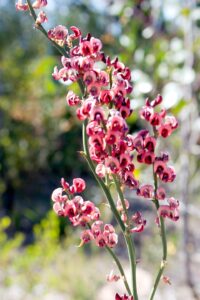
- Grampians Grevillea – A hardy shrub with spidery red flowers that attract honeyeaters.
- Showy Parrot-pea – A bright yellow-and-red pea flower that stands out in open forests.
- Scented Sundew – A small carnivorous plant with sticky, glistening leaves and tiny white flowers.
- Yam Daisy (Murnong) – A yellow daisy-like flower once abundant and culturally important to First Nations people.
- Purple Coral-pea – A climbing plant with vibrant purple pea-flowers that drape over shrubs.
- Blue Tinsel-lily – A striking blue flower with metallic sheen found in sandy or rocky soils.
- Spider Orchid (various species) – Rare and intricate orchids with long, spidery petals.
The best time to visit for wildflowers is in spring, from September to November.
During this period:
- Peak flowering occurs in October, with the greatest diversity and colour.
- Early spring (Sept) brings orchids, wattles, and early heath blooms.
- Late spring (Nov) features grevilleas, lilies, and flowering shrubs across the higher elevations.
You can still see some wildflowers in late August and into early December, but spring is by far the highlight.
Rock Climbing
The rock climbing is world-class, combining spectacular sandstone cliffs, boulders, and deeply significant cultural landscapes.
Popular Climbing Areas
- Summerday Valley – One of the most accessible areas; great for beginners and guided groups.
- Mount Stapylton / Hollow Mountain – Steep walls and famous boulders.
- Bundaleer – Classic long trad routes on sweeping orange cliff faces.
- The Amphitheatre – Impressive multi-pitch climbing on towering walls.
- Wonderland Range – Scenic climbs with a mix of grades.
Tips for Climbing in the Grampians
- Sandstone can be fragile after rain — avoid climbing on wet rock.
- Summer gets very hot; best seasons are autumn and spring.
- Carry plenty of water — many crags are remote.
- Download the latest climbing access map before you go.
Scenic Drives
- Mount Victory Road
- Grampians Tourist Road
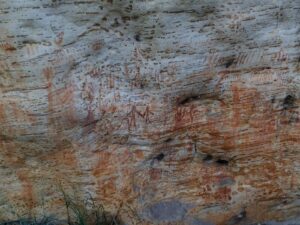
Notable Rock Art Sites
“Did you know the Grampians is home to 86% of all Aboriginal rock art in Victoria?”1
- Ngamadjidj Shelter (“Cave of Ghosts”)
- A very accessible site via a short walk.
- Characterised by white-clay paintings (unlike the more common red pigment) that depict figures.
- Archaeological evidence like campfires and stone tools shows it was a favoured campsite.
- Gulgurn Manja Shelter (Northern Grampians)
- “Gulgurn Manja” means “Hands of Young People.”
- Contains many hand stencils (including children’s) and other motifs like emu tracks.
- Manja Shelter
- Also has around 90 hand stencils.
- Shows human figures and animal tracks in the art.
- Billimina Shelter
- Features red-painted bars, emu tracks, and stick-figure humans.
- Archaeological evidence suggests this shelter was used for tool-making (stone was broken there).
- Bunjil Shelter (Black Range Scenic Reserve just outside the Grampians National Park boundary)
- Highly significant: the only known rock-art painting of Bunjil, the spirit creator, along with two dingoes.
- These sites are culturally sensitive, so treat them with respect.
- Some shelters are fenced or have viewing platforms.
- Check for any temporary closures or restricted access, especially after fire events or conservation work.
Key Campgrounds in the Grampians
- Stapylton Campground (Northern Grampians)
- Vehicle-accessible sites, toilets, and picnic tables.
- Good base for walks, climbing, and exploring the northern part of the park.
- Borough Huts Campground (Forested site next to Fyans Creek)
- Close to Halls Gap and walking routes like the Wonderland Range.
- Smiths Mill Campground (central Grampians)
- Set in heath woodland on the site of an old sawmill
- Only ~1 km from MacKenzie Falls, plus near Boroka & Reed Lookouts.
- Jimmy Creek Campground(open forest beside the upper Wannon River)
- Well-situated if you want to explore both the Southern and Eastern Grampians.
- Buandik Campground(Western Grampians, next to Cultivation Creek)
- Close to hikes to Billimina and Manja rock art shelters and Buandik Falls.
- Strachans Campground(Beside the Glenelg River headwaters)
- Ideal for multi-day bushwalks, four-wheel driving, and more remote camping.
- Troopers Creek Campground(northern Grampians, surrounded by eucalypts and heath)
- Offers good views toward Mt Difficult.
Zumsteins Historic Area
Mt Victory Rd Zumsteins
The area is “on the Mackenzie River, once a thriving tourist resort. Explore the historic ruins where beekeeper Walter Zumstein played host to hundreds of holidaymakers in the 1930’s.”2
Great spot for a picnic with picnic shelters, undercover areas, electric barbecues, and picnic tables.
There is a historic walk which is a 250 m loop through the Zumstein cottages and settlement, with interpretive signs. MacKenzie River Walk, which starts from the picnic area, you can walk to Fish Falls (~4.6 km return) or continue toward MacKenzie Falls.
Victoria’s Largest Regional Zoo – Halls Gap Zoo
4061 Ararat-Halls Gap Road, Halls Gap
Located at the foothills of the Grampians in western Victoria, is the state’s largest regional zoo and home to over 160 native and exotic species. Set in a beautiful bushland environment, the zoo offers visitors the chance to get up close with animals such as giraffes, meerkats, cheetahs, kangaroos, dingoes, and reptiles, as well as endangered species from around the world. It’s a family-friendly destination featuring interactive encounters, keeper talks, and opportunities to feed kangaroos and wallabies. The zoo places a strong focus on conservation and education, making it both an enjoyable and meaningful experience for visitors of all ages.
James McMurtrie – Glass Blowing
“James McMurtrie’s glass art reflects an intimate connection with Victoria’s Grampians District in South Eastern Australia.” 3
63 Springwood Hill Road, Pomonal
James McMurtrie is a renowned glass artist based at Pomonal. Working from his studio and gallery, he creates stunning hand-blown glass sculptures, vases, and art pieces inspired by the colours, light, and natural forms of the surrounding Grampians landscape. Each piece is individually crafted using traditional glassblowing techniques, capturing the beauty of the Australian bush in shimmering layers of colour and texture. Visitors to his studio can watch live glassblowing demonstrations, learn about the creative process, and see how molten glass is transformed into elegant works of art. James McMurtrie’s work reflects both artistic mastery and a deep connection to nature.

Dunkeld Arboretum
Access via Old Ararat Road or Fairbairn Street, Dunkeld
Located at the southern gateway to the Grampians (Gariwerd) National Park, is a peaceful 18-hectare parkland showcasing a diverse collection of native and exotic trees. Once the site of Dunkeld’s original water supply, the arboretum has been transformed into a tranquil reserve with walking tracks, picnic areas, and a large lake reflecting the nearby Mount Sturgeon (Wurgarri) and Mount Abrupt (Mud-Dadjug).
Visitors can enjoy short scenic walks, spot local birdlife, and follow interpretive signs that share the area’s history and natural features. It’s also a popular spot for sunrise and sunset photography, with the mountains providing a dramatic backdrop. The Dunkeld Arboretum offers a calm, natural setting for relaxation and reflection — a perfect complement to exploring the rugged landscapes of the Grampians.
The Stawell Gift Hall of Fame
Central Park, Stawell
Celebrates the history and achievements of Australia’s most famous and long-running professional footrace, the Stawell Gift. First held in 1878, the Stawell Gift is run every Easter weekend at Central Park and attracts athletes from across the country to compete in the prestigious 120-metre handicap sprint.
The Hall of Fame showcases this proud sporting tradition through interactive displays, memorabilia, photographs, and videos that highlight past champions, record times, and the event’s evolution over more than a century. Visitors can learn about the unique handicapping system, famous finishes, and the cultural importance of the Gift to the Stawell community.
Books
- Grampians Walks guide book by Monica and Phil Coleman
- Best Walks of the Gariwerd Grampians National Park by Julie Mundy and Debra Heyes
- The Grampians in Flower by I. R. McCann
- Wildflowers of the Grampians by Joy O’Brien
Map
- The Grampians (Gariwerd) National Park Map by Hemma
Useful Links
- Grampians (Gariwerd) National Park: https://www.parks.vic.gov.au/places-to-see/parks/grampians-national-park
- Find Space, Find Yourself: https://www.visitgrampians.com.au/
- Dunkeld, VIC: https://www.aussietowns.com.au/town/dunkeld-vic
- Halls Gap, VIC: https://www.aussietowns.com.au/town/halls-gap-vic
- Stawell, VIC: https://www.aussietowns.com.au/town/stawell-vic
- Horsham, VIC: https://www.aussietowns.com.au/town/horsham-vic
- Great Western, VIC: https://www.aussietowns.com.au/town/great-western-vic
- Guide to the Grampians: https://www.australia.com/en/places/melbourne-and-surrounds/guide-to-the-grampians.html
- Grampians 4WD Tracks: https://www.4wdingaustralia.com/travel-victoria/grampians-4wd-tracks/
- Off-road trip to Victoria’s majestic Grampians: https://www.4x4australia.com.au/explore/vic/grampians-victoria-4×4
- Top 10 Hikes and Walks in the Grampians: https://www.visitgrampians.com.au/see-do/get-outdoors/walks-hikes
- Halls Gap Zoo: https://hallsgapzoo.com.au/
- Halls Gap: https://www.travelvictoria.com.au/hallsgap/
- Brambuk the National Park and Cultural Centre: https://www.parks.vic.gov.au/places-to-see/parks/grampians-national-park/attractions/central-grampians/things-to-do/brambuk-the-national-park-and-cultural-centre?utm_source=google&utm_medium=maps&utm_campaign=GMB-2020
- Visitor Information Centres: https://www.visitgrampians.com.au/plan-your-trip/travel-info/visitor-information-centres
- James McMurtrie: Glass Blowing: https://www.jamesmcmurtrie.com.au/welcome-1
- Stawell: https://www.visitgrampians.com.au/discover-the-region/northern-grampians/stawell
- Stawell: https://www.travelvictoria.com.au/stawell/
- Visit Hall of Fame: https://stawellgift.com/wp/hall-of-fame/visit-hall-of-fame/
- Explore the wonders of wildflowers on the Grampians Peaks Trail: https://www.parks.vic.gov.au/news/2022/09/08/23/48/explore-the-wonders-of-wildflowers-on-the-grampians-peaks-trail
- Wildflowers: https://www.visitgrampians.com.au/see-do/nature-wildlife/wildflowers
- Wildflowers of the Grampians – Joy O’Brien: https://shop.absoluteoutdoors.com.au/products/wildflowers-of-the-grampians
- Best Walks of the Gariwerd Grampians National Park: https://www.readings.com.au/product/9781925868951/best-walks-of-the-gariwerd-grampians-national-park–julie-mundy-debra-heyes–2022–9781925868951
- Camping in the Grampians, everything you need to know: https://www.visitgrampians.com.au/blog/camping-in-the-grampians-everything-you-need-to-know
- Everything you need to know before camping in Grampians National Park: https://www.mightycampers.com/blog/everything-you-need-to-know-before-camping-in-grampians-national-park
- The Complete Guide To Camping In The Grampians: https://travelmademedoit.com/camping-in-the-grampians/
- Discover Rich Aboriginal Culture: https://www.visitgrampians.com.au/see-do/culture/indigenous-culture/aboriginal-rock-art-sites
- Zumsteins Historic Area: https://www.visitgrampians.com.au/products/zumsteins-historic-area
- https://www.visitgrampians.com.au/blog/rock-art-in-the-grampians?utm_source=chatgpt.com ↩︎
- https://www.parks.vic.gov.au/places-to-see/sites/zumstein-picnic-area ↩︎
- https://www.jamesmcmurtrie.com.au/welcome-1 ↩︎