

Leonard Beadell
“Dick Smith has grand plans to donate a famous Australian bulldozer to the National Road transport Museum in Alice Springs.
Len Beadell’s big yellow Cat D8 dozer was used to construct the Gunbarrel Highway in the 1950s with Doug Stoneham driving and Len Beadell surveying.
Dick has pledged 50 thousand dollars to build a shed and a diorama at the museum and he’s asking if the Northern Territory Government will match his donation.
It’s currently sitting at his property in NSW. It’ll have to make a 2,000km trip to the Centre if it receives a new home.”
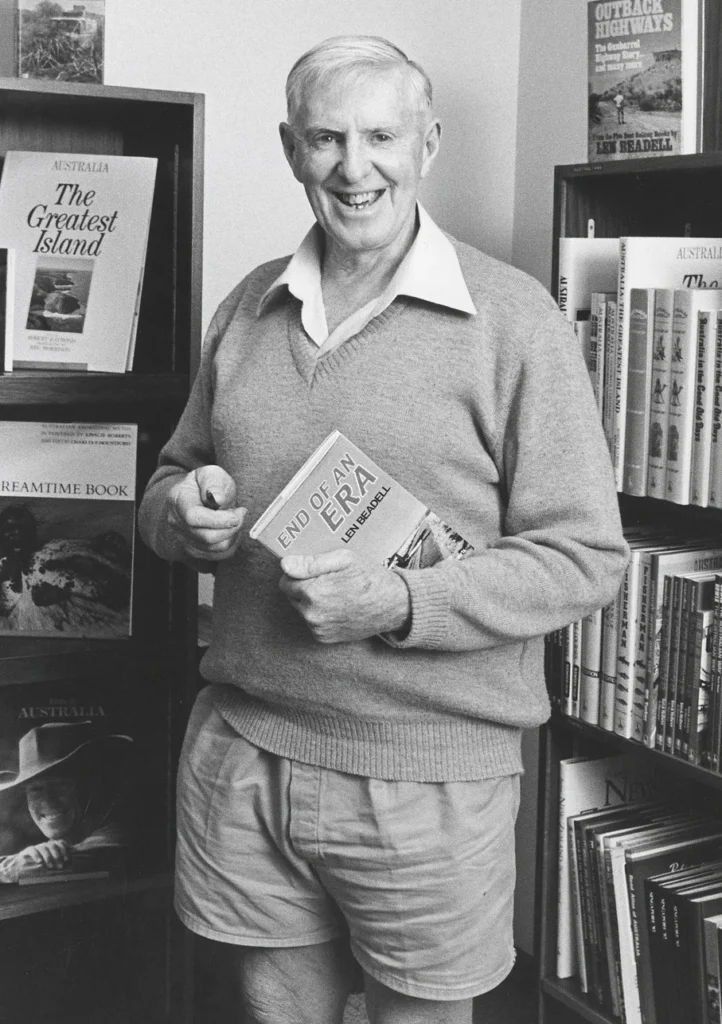
Leonard (Len) Beadell (1923–1995)
Leonard “Len” Beadell (1923–1995) was one of Australia’s great modern explorers, often called the “last true Australian explorer”. A surveyor, roadbuilder, bushman, and author, he played a central role in opening up vast parts of remote central and western Australia during the mid-20th century. Working for the Australian Government’s Weapons Research Establishment, Beadell travelled through some of the most isolated country on the continent, often with only basic equipment, a compass, and his trademark sense of humour. He named and surveyed the locations for the original Woomera Rocket Range and created precise maps of regions that had previously been largely unmapped by Europeans.
Beadell is best known for constructing more than 6,000 kilometres of outback roads, including the famous Gunbarrel Highway, Connie Sue Highway, Gary Highway, Gary Junction Road, and the Anne Beadell Highway, named after his wife. These roads opened remote deserts—the Gibson, Great Victoria, and Great Sandy—to scientific work and later to adventurous travellers. His books, such as Too Long in the Bush and Beating About the Bush, combine humour, bushmanship, and storytelling, helping cement his status as an outback legend. Len Beadell’s legacy lives on in the “Beadell Roads,” which remain iconic for 4WD explorers and symbolise the spirit of Australia’s remote interior.
Books
- Too Long in the Bush by Len Beadell
- Blast the Bush by Len Beadell
- Bush Bashers by Len Beadell
- Still in the Bush by Len Beadell
- Beating About the Bush by Len Beadell
- End of an Era by Len Beadell
- Outback Highways by Len Beadell
- The Beadell Roads by Westprint Outback Maps
Maps
- Anne Beadell Highway including Plumridge Lakes by Westprint Outback Maps
- The Gunbarrel Highway by Westprint Outback Maps
Dick Smith
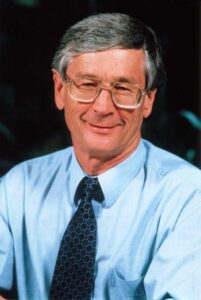
Dick Smith is one of Australia’s most recognisable entrepreneurs, adventurers, and philanthropists. He founded Dick Smith Electronics in 1968, growing it from a small hobbyist shop into a national retail chain. Beyond business, he is known for his adventurous spirit—completing record-breaking flights, including the first solo helicopter circumnavigation of the globe.
Smith is also a passionate advocate for humanitarian and environmental causes, donating millions to charities, championing issues such as population sustainability, and supporting Australian-made products through ventures like Dick Smith Foods. Outspoken, energetic, and deeply involved in national debates, he remains a prominent figure in Australian public life.
Caterpillar D8 bulldozer
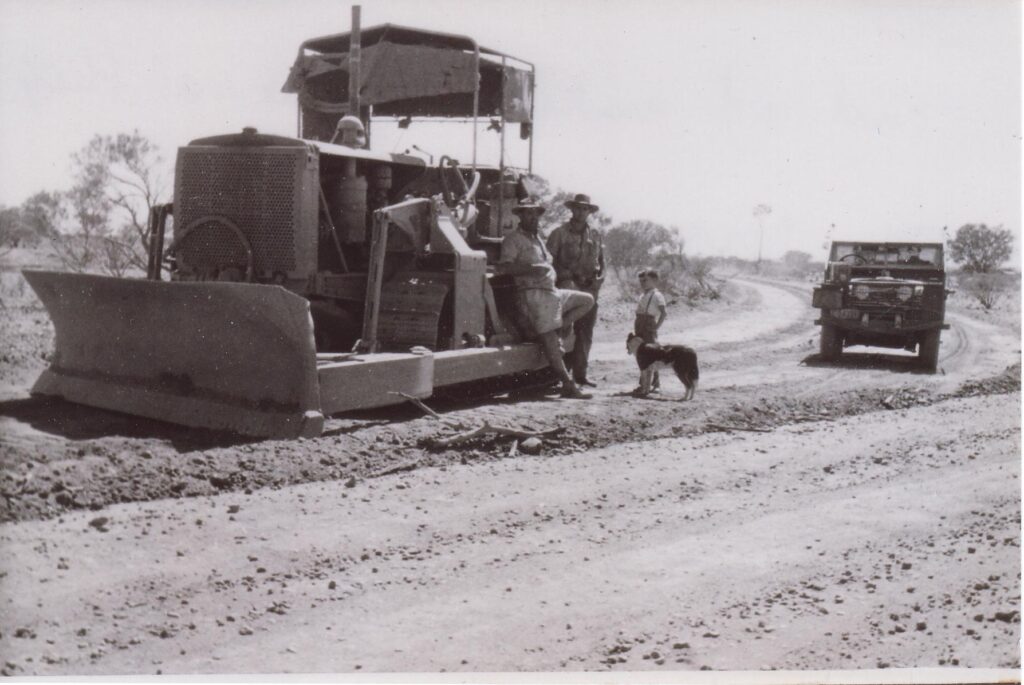
The Caterpillar D8 bulldozer is one of the most iconic and widely used heavy machines in Australia’s construction, mining, and outback road-building history. Introduced in the 1930s and continually updated, the D8 sits in the mid-large dozer class and is known for its strength, durability, and ability to work in tough, remote environments. With its powerful diesel engine, heavy blade, and robust tracked undercarriage, the D8 can push large volumes of earth, clear vegetation, cut roads, and pull scrapers—making it a favourite for major earthworks.
In the Australian outback, the D8 became particularly well known thanks to explorers and road makers like Len Beadell, whose Gunbarrel Road Construction Party used D8 dozers to carve tracks across thousands of kilometres of desert. The machine’s reliability under extreme heat, sand, and isolation earned it a near-legendary status among bush workers. Today’s modern D8 models feature advanced hydraulics, improved operator comfort, and electronic controls, but the classic earlier versions—like the D8H and D8K—remain cherished pieces of machinery history. Whether in mining operations, remote road building, or heavy construction, the Caterpillar D8 continues to represent power, endurance, and outback ingenuity.
Len Beadell and the Gunbarrel Road Construction Party primarily used a Caterpillar D8 bulldozer – specifically the Caterpillar D8 “17A” series.
This model became legendary in outback history because of the sheer amount of work it completed under brutal desert conditions. The 17A D8 was tough, relatively simple to repair in the bush, and powerful enough to cut roads through spinifex, sandhills, rocky gibber plains, and mulga scrub. Beadell’s team often referred to it simply as “the D8,” and it was the core machine used to construct many of the iconic Beadell roads, including the Gunbarrel Highway, Connie Sue Highway, Gary Highway, and Anne Beadell Highway.
The 17A series is remembered today as one of the great outback bulldozers—reliable, rugged, and capable of astonishing work with minimal support. It remains an important part of Beadell’s legacy and of Australian road-building history.
Copyright: https://www.lenbeadell.com.au/
National Road Transport Museum
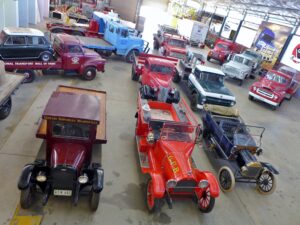
The National Road Transport Museum in Alice Springs is one of Australia’s most significant transport heritage attractions, celebrating the history of road transport across the outback and the nation. Spread across a large site, the museum features an impressive collection of historic trucks, vintage vehicles, buses, road trains, and early machinery that played a crucial role in opening up remote parts of Australia. From early 20th-century delivery trucks to massive modern road trains, the displays show how transport evolved to meet the challenges of long distances, rough roads, heat, and isolation.
A highlight of the museum is the Kenworth Dealer Hall of Fame, which showcases the development of Australia’s most iconic truck brand and includes beautifully restored vehicles. There are also interactive and interpretive exhibits telling the stories of pioneering drivers, mechanics, mail carriers, and families who kept remote communities supplied before sealed roads existed. Outdoor and indoor display areas allow visitors to walk among historic rigs, see restored engines, and learn about the ingenuity behind outback transport. The museum is open year-round and is a must-visit for anyone interested in motoring history, engineering, or the spirit of Australia’s transport pioneers.
Major Len Beadell Roads
- Gunbarrel Highway (1955–1958)
- The first of Len Beadell’s famous outback roads, built to support Woomera Rocket Range surveying, and often called the “backbone” of his network.
- Connie Sue Highway (1962)
- Named after his daughter, this road was built during Beadell’s southern surveys, connecting Warburton to Rawlinna across remote desert country.
- Anne Beadell Highway (1953–1962)
- Named for his wife, this long east–west track was constructed over nearly a decade to link South Australia with Western Australia for weapons-testing access.
- Sandy Blight Junction Road (1960)
- Built during a demanding survey through rugged desert terrain, it links the Great Central Road to the Gary Junction Road.
- Gary Highway (1963)
- Named after Beadell’s son, this track runs north–south through isolated parts of Western Australia, constructed as part of the later Woomera survey work.
- Gary Junction Road (1960–1963)
- A major east–west route connecting Western Australia to the Northern Territory, created to extend access for further surveying and testing operations.
- Talawana Track (1963–1964)
- The last major road built by Beadell and the Gunbarrel Road Construction Party, linking the Canning Stock Route to the Gary Highway.
Our club has travelled several of Len Beadell’s iconic outback roads, driven by a shared love of exploring Australia’s most remote and rugged landscapes.
Useful Websites
- Len Beadell Publications: https://www.lenbeadell.com.au/
- National Road Transport Museum: https://www.roadtransporthall.com
- Len Beadell: https://adventurecurated.com.au/blogs/overlanding/len-beadell?
- Len Beadell – The last true Australian Explorer: https://www.facebook.com/lenbeadell/
- Profiling the life of outback surveyor and road builder Len Beadell: https://www.abc.net.au/listen/programs/overnights/profiling-the-life-of-outback-surveyor-and-road-builder-len-bead/13557084
- Dick Smith: https://www.facebook.com/dicksmithfairgo/