

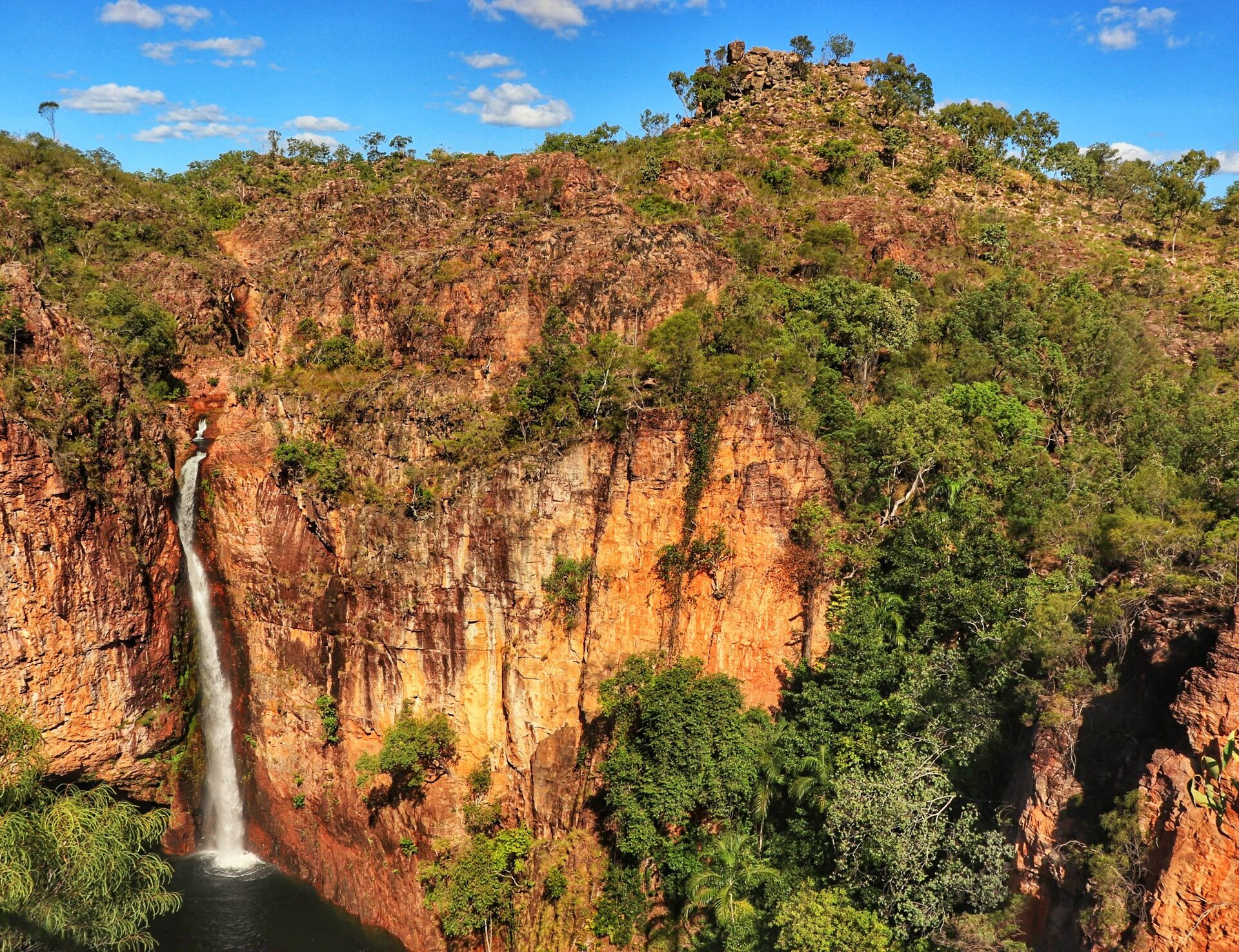
Litchfield National Park is a well-known national park in the Northern Territory of Australia, located about 100 km southwest of Darwin. It is easily accessible by road, which makes it a popular destination for both locals and tourists seeking a quick escape from the city. The park was officially declared in 1986 and is named after Frederick Henry Litchfield, an explorer who surveyed the area in the 19th century.
The park covers an area of roughly 1,500 square kilometres, making it relatively small compared to other major Australian national parks like Kakadu National Park. Despite its smaller size, Litchfield is densely packed with natural attractions, which allows visitors to experience a wide variety of landscapes within a short distance.
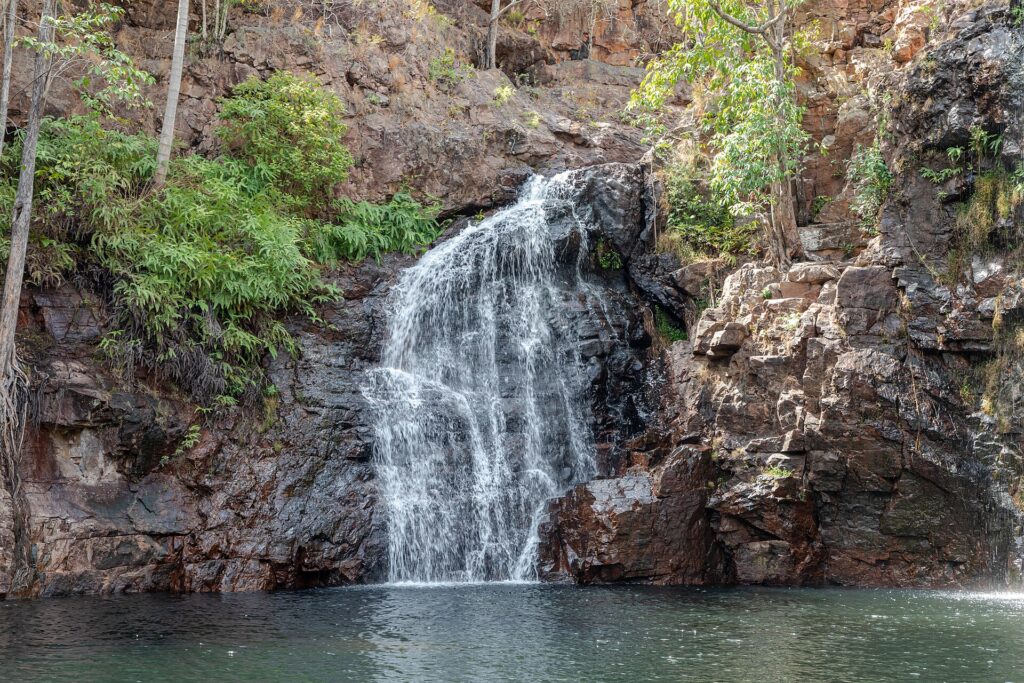
Geographically, Litchfield National Park is characterised by a mix of sandstone plateaus, waterfalls, monsoon rainforests, and open woodland. During the wet season, numerous waterfalls flow strongly, including well-known sites such as Florence Falls, Wangi Falls, and Tolmer Falls. These falls often feed into clear plunge pools that are popular for swimming in the dry season.
Another striking feature of the park is its magnetic termite mounds, which are tall, thin structures aligned north–south to regulate temperature. The park also includes savanna woodlands, paperbark swamps, and patches of rainforest that support diverse wildlife. Seasonal changes between the wet and dry periods strongly influence the landscape, shaping the park’s ecosystems and making it a dynamic natural environment.
- Tolmer Falls
- A dramatic high waterfall viewed from a lookout, known for its cliffside setting and wildlife habitat.
- Magnetic termines
- Lost City
- Territory Wildlife Park
- Rum Jungle Uranium Mine site
- Wangi Falls
- The most popular and accessible waterfall, with a large swimming area and lush monsoon forest surrounding it.
- Sandy Creek Falls (Tjaynera)
- A more secluded waterfall, reached via a 4WD track and a short walk, offers a quieter swimming spot.
- Florence Falls
- A stunning twin waterfall cascading into a clear plunge pool, reached by a scenic staircase.
- Pethericks Rainforest Reserve
- Buley Rockhole
- A series of cascading rock pools perfect for relaxing and wading rather than a single large fall.
- Blyth Homestead
- A “reminder of the tough conditions faced by pioneers in remote areas.”1
- Cascades
- Upper Cascades
- Lower Cascades
- Robin Falls
- Reynolds Track
- Tabletop Track
- Tjaynera Falls
- Greenant Creek
- Tjaetaba Falls lookout
- Tableland Creek (Sybel Springs)
- Nina’s Ark Wildlife Sanctuary
- “Sanctuary where animals are not only cared for, but truly celebrated.”2
- Walker Creek
- A peaceful creek with small cascades and camping spots, ideal for a less crowded experience.
Batchelor
- Rum Jungle Mine Manager’s House
- Heritage Walk
- Batchelor Butterfly Farm & Pet Garden
Adelaide River
- Adelaide River War Cemetery
- Adelaide River Railway Heritage Precinct
- Adelaide River Cruises
- 303 Bar and Bistro
- Fogg Dam Conservation Reserve
Note: if you are a visitor to the Northern Territory, you will need a permit to camp in the National Park, which you can only get online. For more information, fees, etc., click on this link
Always check conditions before you go. For road conditions.
Four Wheel Driving
Preparation is everything. If you’re equipped, informed, and stick to open tracks, 4WDing in Litchfield can be one of the best ways to see the park beyond the main tourist spots.
Preparation tips
- Check road and track conditions before you go—many tracks close in the wet season
- Lower tyre pressure for sandy or corrugated tracks to improve traction and comfort
- Fuel up beforehand (no fuel stations inside the park)
- Travel with another vehicle if possible, especially on remote tracks
- Let someone know your travel plans if heading off main roads
What to take
- High-clearance 4WD vehicle (many tracks are rough, sandy, or rocky)
- Recovery gear – snatch strap, shovel, traction boards (in case you get bogged)
- Plenty of water – at least several litres per person, as conditions are hot and remote
- Food and supplies – there are limited services inside the park
- Offline maps or GPS – mobile reception is unreliable
- First aid kit + insect repellent + sunscreen
Best time to travel
- Dry season (May–October) is the best time—tracks are open, conditions are safer, and waterfalls are still flowing
- Wet season (Nov–Apr) brings heavy rain, flooding, and crocodile movement, causing many 4WD tracks to close
Safety reminders
- Never drive through floodwater—depth and crocodile presence are unknown
- Stick to marked tracks to avoid getting lost or damaging the environment
- Take it slow—corrugations, river crossings, and wildlife can catch you off guard
Tracks Worth Exploring
- Reynolds River Track – A popular 4WD loop that runs through the western side of the park, featuring river crossings, rocky sections, and access to waterfalls like Tjaynera Falls; best suited to experienced drivers.
- Blyth Homestead Track – A shorter detour off Reynolds River Track leading to a historic homestead site, offering an easier drive with a mix of bush scenery and cultural history.
- Lost City Track – A rough, sandy track leading to unusual sandstone formations that resemble ancient ruins; requires high-clearance 4WD and careful driving.
- Central Valley Track – A scenic but less-travelled route connecting key areas of the park, with varying terrain and a more remote feel.
- Sandy Creek (Tjaynera Falls) Track – A moderately challenging access track to Tjaynera Falls, often corrugated or muddy depending on conditions, but worth it for the quieter swimming spot.
Termite Mounds
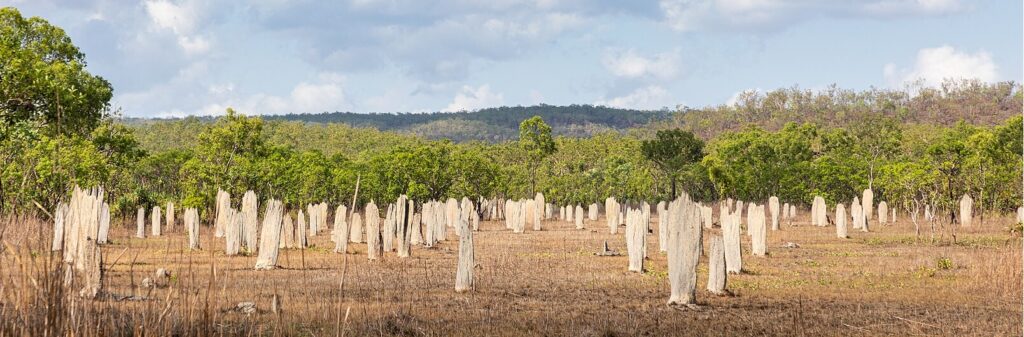
The magnetic termite mounds are one of the park’s most unusual natural features. They are tall, thin termite nests—often up to 2–3 metres high—built by a species of termite (Amitermes meridionalis) to survive the extreme heat of northern Australia. From a distance, they look like rows of flat, upright slabs sticking out of the ground.
They’re called “magnetic” because they are almost perfectly aligned north–south, like a compass needle. This orientation is not random—it helps regulate temperature inside the mound. The narrow edges face east and west, so the mound gets less direct sunlight during the hottest parts of the day, preventing overheating.
Inside the mound is a complex system of tunnels and chambers that act like natural air conditioning. Termites constantly adjust and repair the structure, allowing air to circulate and maintain a stable internal temperature and humidity. This is crucial for the survival of the colony, especially for the queen and fungus gardens that many termites rely on for food.
These mounds are typically found in open floodplains and grasslands within the park, where shade is limited and temperature control is vital. They are a great example of how animals adapt to harsh environments using surprisingly sophisticated natural engineering.
There is a dedicated viewing area known as the Magnetic Termite Mounds. This site has a boardwalk that lets you safely walk through a large field of mounds while protecting the fragile structures.
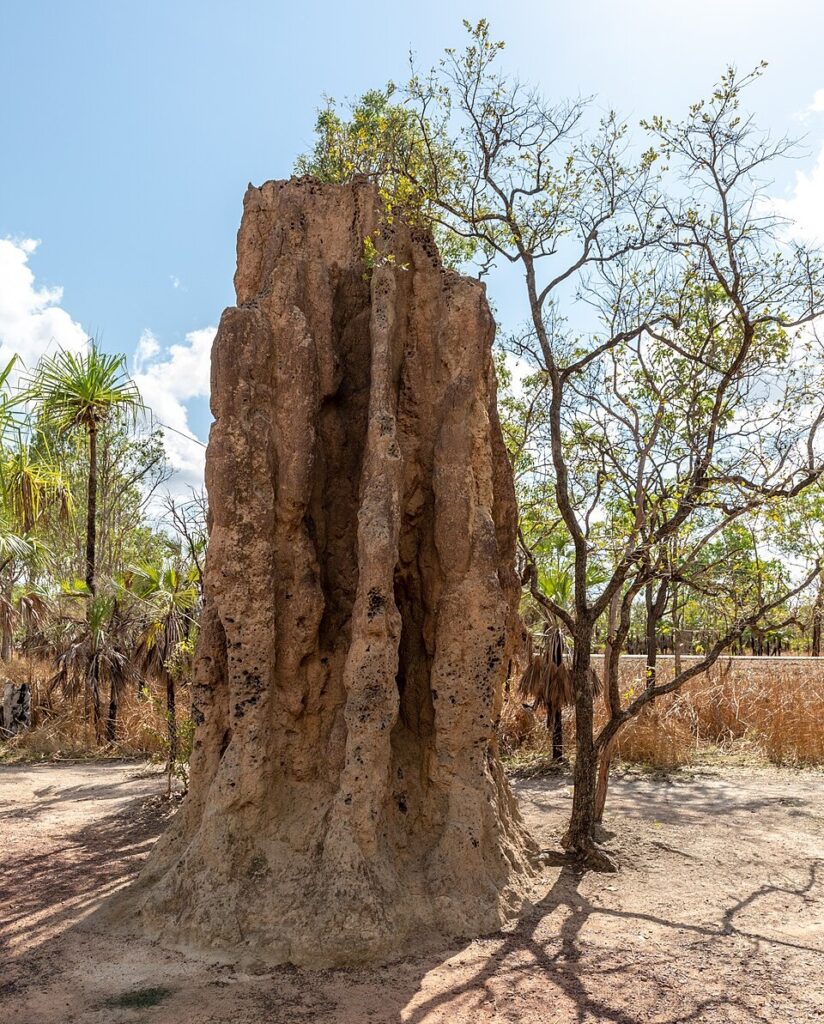
Nearby, you can also visit the Cathedral Termite Mounds, which are built by a different species (Nasutitermes triodiae). These termites construct tall, irregular, dome-shaped structures that can reach up to 4–5 metres high. The “cathedral” name comes from their appearance—they often look like old stone buildings with spires and buttresses.
These mounds don’t rely on a strict magnetic alignment. Instead, their complex shape helps with ventilation and temperature control, allowing air to flow through internal tunnels and keep the colony stable despite the heat.
For the best experience, visit during the cooler parts of the day (morning or late afternoon), when the lighting makes the mounds stand out more dramatically across the floodplain—and it’s much more comfortable to explore.
Crocodiles
Crocodiles are an important safety consideration, but with awareness and common sense, visiting is very safe.
Types of crocodiles you might encounter
There are two species in the park:
- Freshwater crocodiles (freshies) – generally shy and less dangerous to humans, but they can still bite if provoked.
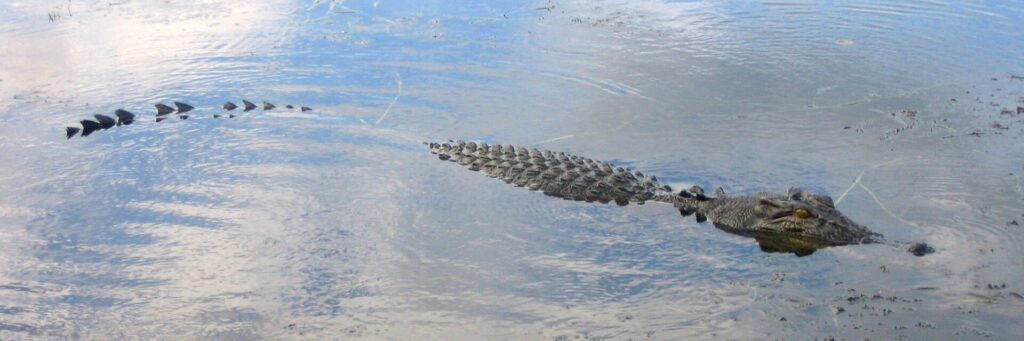
- Saltwater crocodiles (salties) – large, highly dangerous predators occasionally found in the region, especially during the wet season.
Where crocodiles are found
- Crocodiles are more likely in rivers, creeks, and floodplains, particularly in less-visited or remote areas.
- Popular swimming spots like Wangi Falls and Florence Falls are regularly monitored by rangers.
- After heavy rain or during the wet season, saltwater crocodiles can move into new areas, so conditions can change quickly.
What you should do
- Only swim where it is clearly signposted as safe
- Read all warning signs carefully—they are there for a reason
- Stay well back from the water’s edge, especially in unknown areas
- Keep children close and supervised at all times
- Follow ranger advice and park updates, especially in the wet season
What NOT to do
- Don’t swim in unmarked or closed areas
- Don’t approach or feed crocodiles (illegal and extremely dangerous)
- Don’t dangle arms or legs in the water from rocks or banks
- Don’t camp too close to riverbanks or waterholes
If a spot is open and marked safe, it has been checked—but if in doubt, stay out. Crocodiles are unpredictable, and respecting the rules is the best way to enjoy the park safely.
Wildlife and Plant Life
You will find a mix of tropical savanna, wetlands, and rainforest species. What you see often depends on the season.
Wildlife you might see
- Agile Wallabies – Common in open woodland, especially at dawn and dusk.
- Dingos – Occasionally spotted in quieter areas, usually early morning or evening.
- Saltwater Crocodiles & Freshwater Crocodiles
- Rainbow Bee-eaters – Bright, colourful birds often seen near water and open areas.
- Frilled-neck Lizards – An iconic reptile that may run on its hind legs when startled.
- Flying Fox – Seen roosting in trees or flying at dusk.
Plant life and landscapes
- Paperbark Trees – Found in swampy areas, with distinctive peeling bark.
- Pandanus – Spiky plants near creeks and waterfalls.
- Cycads – Ancient, palm-like plants scattered through the bush.
- Eucalyptus Woodland – Dominates much of the park’s landscape.
- Monsoon rainforest patches – Dense, green areas around waterfalls like Wangi Falls.
Best time to see wildlife & plants
Dry season (May–October)
- Best for spotting animals—wildlife gathers around shrinking water sources
- Easier access to most areas and walking tracks
- Comfortable weather for exploring
Early dry (May–July)
- Waterfalls are still flowing strongly
- Lush greenery from the recent wet season
Wet season (Nov–April)
- Landscapes are at their greenest with dramatic waterfalls
- More birdlife and breeding activity
- Harder access and fewer safe swimming/4WD options
For the best wildlife encounters, head out early in the morning or late in the afternoon—that’s when animals are most active, and temperatures are cooler.
Websites
- Litchfield National Park: https://nt.gov.au/parks/find-a-park/litchfield-national-park
- Litchfield National Park: https://northernterritory.com/darwin-and-surrounds/destinations/litchfield-national-park
- Guide to Litchfield National Park: https://www.australia.com/en/places/darwin-and-surrounds/guide-to-litchfield-national-park.html
- Explore Litchfield National Park: https://litchy.com.au/
- Litchfield National Park: https://ethicaladventures.com.au/litchfield-national-park/
- Adelaide River, NT: https://www.aussietowns.com.au/town/adelaide-river-nt
- Batchelor, NT: https://www.aussietowns.com.au/town/batchelor-nt
- Batchelor Butterfly & Animal farm: https://butterflyfarm.net.au/
- Wildlife Sanctuary in the Northern Territory: https://www.ninasarksanctuary.com.au/
- Adelaide River War Cemetery: https://www.cwgc.org/visit-us/find-cemeteries-memorials/cemetery-details/2023510/adelaide-river-war-cemetery/
- Adelaide River Cruises: https://www.jumpingcroccruises.com.au/
- Wildlife Cruises: https://www.adelaiderivertours.com.au/
- Adelaide River & Batchelor: https://www.tourismtopend.com.au/adelaide-river-batchelor
- 303 Bar & Bistro: https://adelaideriverinntouristpark.com.au/303-bar-bistro/
- Fogg Dam Conservation Reserve: https://nt.gov.au/parks/find-a-park/fogg-dam-conservation-area
- Blyth Homestead: Tracing the Footsteps of Pioneers in the Australian Outback: https://litchy.com.au/blyth-homestead-tracing-pioneers-australian-outback/
- Robin Falls is a Northern Territory Hidden Gem: https://weareexplorers.co/robin-falls-nt/
- Wangi Falls: https://nt.gov.au/parks/find-a-park/litchfield-national-park/wangi-falls
- Buley Rockhole: https://nt.gov.au/parks/find-a-park/litchfield-national-park/buley-rockhole
Magnetic Termite Mounds: https://northernterritory.com/darwin-and-surrounds/see-and-do/magnetic-termite-mounds - Magnetic Termite Mounds in Litchfield National Park, Northern Territory, Australia: http://www.litchfieldnationalpark.com/magnetic_termite_mounds_litchfield_national_park.htm
- The Lost City: https://nt.gov.au/parks/find-a-park/litchfield-national-park/lost-city
- The Lost City – A Litchfield National Park Guide: https://litchy.com.au/journey-lost-city-litchfield-national-park/
- Cascades: https://nt.gov.au/parks/find-a-park/litchfield-national-park/cascades
- Reynolds River Track; the best of Litchfield by 4WD: https://www.4wdingaustralia.com/travel-northern-territory/reynolds-river-track/
- Surprise Creek Falls; the best of Litchfield: https://www.4wdingaustralia.com/travel-northern-territory/surprise-creek-falls/
- Hideaway Litchfield; a great value Bush Camp: https://www.4wdingaustralia.com/travel-northern-territory/hideaway-litchfield-bush-camp/
- Florence Falls in Litchfield National Park; a magic and busy place: https://www.4wdingaustralia.com/travel-northern-territory/florence-falls/
- Reynolds River Track: 2-day itinerary: https://northernterritory.com/itineraries/reynolds-river-track-2-day-itinerary
- Tolmer Falls: https://nt.gov.au/parks/find-a-park/litchfield-national-park/tolmer-falls
- Accessibility in Litchfield National Park: A Complete Guide: https://litchy.com.au/accessibility-in-litchfield-national-park/
- Tabletop Track – Hike a Perfect Multi-day Circuit in NT’s Litchfield National Park: https://weareexplorers.co/tabletop-track-hike-northern-territory/
- Greenant Creek: https://weareexplorers.co/tabletop-track-hike-northern-territory/
- Crocodile safety in the Top End: where it’s safe to swim and how to stay safe: https://www.racv.com.au/royalauto/travel/australia/crocodile-safety-guide.html
- Avibase – Bird Checklists of the World-Litchfield National Park: https://avibase.bsc-eoc.org/checklist.jsp?region=AUno0013&list=howardmoore
- 4×4 Trip to Litchfield National Park, NT: https://www.4x4australia.com.au/explore/nt/4×4-trip-to-litchfield-national-park-nt
- https://northernterritory.com/darwin-and-surrounds/see-and-do/blyth-homestead ↩︎
- https://www.ninasarksanctuary.com.au/about ↩︎