

4WD (Four-Wheel Drive) vs AWD (All-Wheel Drive)
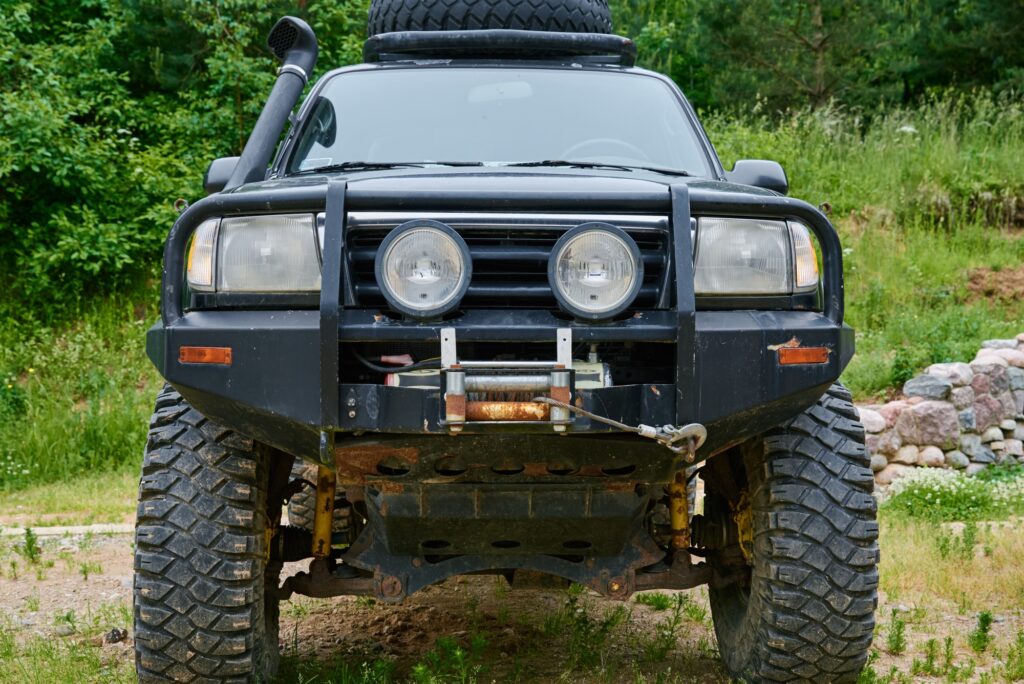
There is very little mechanical difference between a 4WD and an AWD. AWD is generally for on-road driving, and 4WD is for off-road driving.
4×2 means the vehicle has four wheels, but only two are driven by the engine. The powered wheels can be either in the front (FWD – front-wheel drive) or rear (RWD – rear-wheel drive). They are usually more fuel-efficient and lighter than 4x4s but are not ideal for off-road driving or low-traction conditions.
4WD (Four-Wheel Drive) refers to a drivetrain system where all four wheels are powered by the engine. It’s commonly used in off-road or rugged vehicles to improve traction on slippery, loose, or uneven terrain.
4×4 is a term used to describe a vehicle where:
- The first number (4) = total number of wheels
- The second number (4) = number of wheels that are driven (i.e., receive power)
Some models come in both 4×2 and 4×4 models, for example: Isuzu MU-X SUVs, Ford Everest, Toyota HiLux, etc.
Part-time 4WD vs full-time 4WD
The vast majority of modern 4WD vehicles are equipped with a part-time 4WD system. This means the vehicle normally operates in 2WD mode for better fuel efficiency and smoother on-road performance.
You can engage 4WD with the push of a button, a turn of a dial, or a manual lever — depending on your vehicle.
When to Use 4WD
Using four-wheel drive isn’t just about flipping a switch — it requires active driver input to get the most out of your vehicle in challenging conditions. For example:
- Switching Modes: Choosing between 2H, 4H, or 4L depending on the terrain.
- Traction Management: Monitoring wheel slip and using traction aids when necessary.
- Hill Descent Control: Engaging systems that help maintain control on steep declines.
- Throttle Control: Applying smooth, consistent power to avoid wheel spin or bogging down.
- Locking Differentials: Manually engaging diff locks to keep all wheels turning evenly in low-traction situations.
Together, these inputs give the driver greater control, safety, and performance on rough or slippery terrain — but they also require knowledge and practice.
If you’re dealing with:
- Rough or uneven terrain
- Slippery roads (rain, snow, mud)
- Off-road trails
- Towing heavy loads on loose surfaces
Most part-time 4WD systems allow you to switch between:
- 2H (Two-High) – Standard two-wheel drive
- 4H (Four-High) – For light off-roading, snow, or gravel at normal speeds
- 4L (Four-Low) – For steep, slow, or extremely rough terrain, where maximum torque is needed
Summary Table
| Term | Meaning | Use Case |
|---|---|---|
| 4WD | Four-Wheel Drive (drives all wheels) | Off-roading, rough terrain |
| 4×4 | 4 wheels, all 4 driven (same as 4WD) | Off-road vehicles, utes |
| 4×2 | 4 wheels, only 2 driven (FWD or RWD) | City driving, light use |
Useful Links
- AWD vs 4WD: What’s the difference & how they work: https://www.racv.com.au/royalauto/transport/cars/difference-between-4wd-awd-suv.html
- AWD vs 4WD: What’s the Difference?: https://www.roadandtrack.com/car-culture/a24663372/all-wheel-drive-four-wheel-drive-differences-explained/
- What is the difference between an All-Wheel Drive (AWD) car and a Four-Wheel Drive (4WD) car?: https://www.subaru.com.au/articles/car-advice/all-wheel-drive-awd-vs-four-wheel-drive-4wd
- 4WD versus AWD, what are the functional differences?: https://tyrepoweroconnor.com.au/news/3276-4wd-versus-awd-what-are-the-functional-differences
- What’s the difference between 4WD and AWD?: https://www.ami.co.nz/hub/driving/4wd-vs-awd
- Choosing between an AWD vs a 4WD: https://www.4x4downunder.com.au/blogs/news/awd-vs-4wd-choosing-the-best-option-for-you?srsltid=AfmBOoqVH0-tOFXwYeKZXEZ3r2-Z_GuTIRnW0-T-tbYqiX3KAgI93HLa
- What’s the difference between 4WD and AWD?: https://australianmechanical.com.au/4wd-vs-awd/